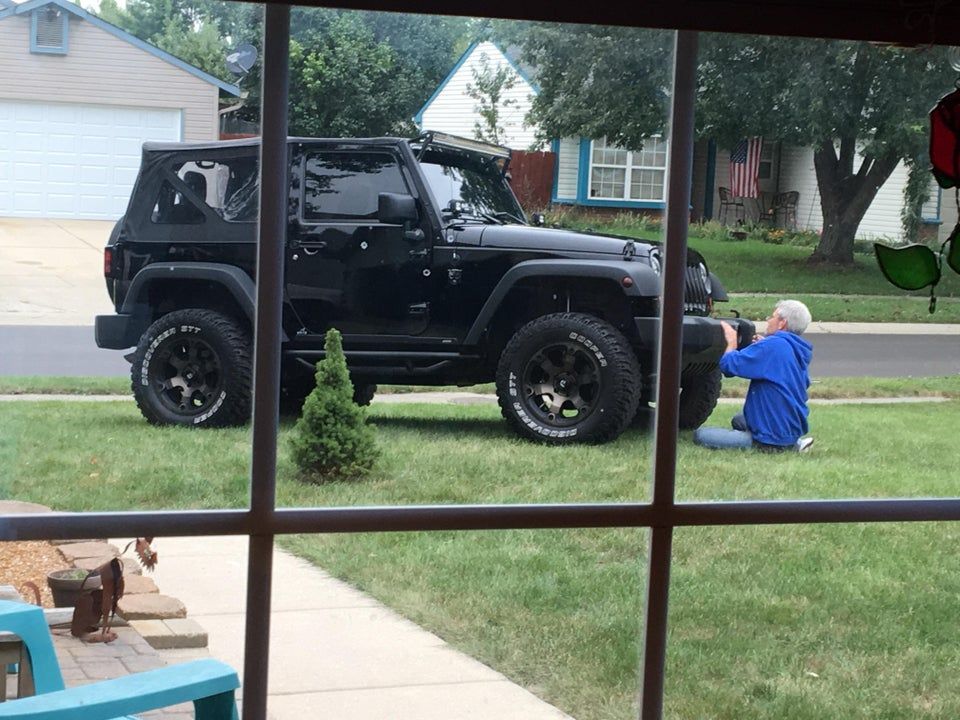
Worried about gas prices eating into your Jeep adventures? You’re not alone. Many Jeep owners are looking for ways to reduce their fuel consumption without sacrificing the freedom and fun that comes with owning these capable vehicles.
Eco-driving isn't about turning your Jeep into an economy car. It’s about adopting smart driving habits that maximize fuel efficiency while still enjoying the power and performance you expect. By debunking some common myths, we can unlock real-world fuel savings and contribute to a greener environment – all while keeping the spirit of Jeep ownership alive. It's about finding that sweet spot where responsibility meets the open road (or trail!).
Want a quick win? Try anticipating traffic flow and easing off the accelerator well in advance when approaching red lights or slowing traffic. This simple change can significantly reduce fuel wasted on unnecessary braking and acceleration.
Eco-Driving Myths Jeep Owners Should Stop Believing
Let's face it: Jeeps aren't exactly known for their stellar fuel economy. But that doesn't mean you can't make a difference. Many common beliefs about fuel-efficient driving simply don’t hold up, especially when applied to the unique characteristics of a Jeep. Understanding these myths is the first step towards achieving better mileage and a smaller carbon footprint.
Myth #1: Aggressive Driving Doesn’t Impact Fuel Economy
This is perhaps the most pervasive myth of all, and it’s particularly relevant to Jeep owners who might be tempted to unleash their vehicle's power frequently. The truth is, aggressive driving habits like rapid acceleration, hard braking, and speeding have asignificantimpact on fuel consumption. Every time you stomp on the gas pedal to quickly get up to speed, or slam on the brakes at the last second, your engine is burning fuel inefficiently.
Think of it this way: your Jeep's engine has to work much harder to rapidly increase or decrease speed. This requires more fuel injection, which directly translates to lower MPG. Studies have consistently shown that aggressive driving can reduce fuel economy by as much as 30% on the highway and 40% in stop-and-go traffic. That's a huge chunk of change at the pump!
Instead of flooring it, try a gentler approach. Accelerate smoothly and gradually, maintain a consistent speed whenever possible, and anticipate traffic conditions to avoid unnecessary braking. You might be surprised at how much fuel you save without sacrificing too much driving enjoyment. This is especially crucial with larger Jeep models like the Grand Cherokee or Wagoneer, where the impact of aggressive driving is even more pronounced.
Myth #2: Idling is Better Than Restarting
This myth stems from the outdated belief that restarting an engine consumes more fuel and causes more wear and tear than letting it idle. Modern engine technology has largely debunked this idea. In fact, idling for more than a few seconds actually wastes more fuel than restarting the engine.
Modern Jeeps are equipped with sophisticated engine management systems that efficiently handle starting and stopping. When you idle, your engine continues to burn fuel to keep the engine running, but it’s not doing any work. Think of it as throwing money away.
The general rule of thumb is that if you’re going to be stopped for more than 10 seconds, it’s more fuel-efficient to turn off your engine. This is especially true for older Jeep models, which may not have the most advanced fuel injection systems.
Consider this scenario: you're waiting to pick someone up from school or running a quick errand. Instead of letting your Jeep idle for several minutes, turn off the engine. You'll save fuel, reduce emissions, and minimize unnecessary engine wear. Many newer Jeeps even have automatic start-stop systems to help with this, though you can usually disable them if desired for off-road situations.
Myth #3: Premium Fuel Always Improves Fuel Economy
While premium fuel is recommended for some high-performance vehicles, it doesn't necessarily translate to better fuel economy for all Jeeps. Unless your owner's manual specifically recommends premium fuel, using it won't magically boost your MPG.
Premium fuel has a higher octane rating, which helps prevent engine knocking in high-compression engines. However, if your Jeep's engine is designed to run on regular unleaded fuel, using premium fuel won't provide any noticeable performance or fuel economy benefits. You’re essentially paying more for a feature your engine doesn't need.
Stick to the fuel grade recommended in your owner's manual. Using the correct fuel ensures optimal engine performance and prevents potential damage. Don’t fall for the marketing hype that claims premium fuel will magically transform your Jeep into a fuel-sipping machine.
People Also Ask: "Can Jeeps really be fuel efficient?"
While Jeeps may not be the most fuel-efficient vehicles on the road, theycanachieve reasonable MPG figures with mindful driving habits. Techniques like smooth acceleration, maintaining consistent speeds, and proper tire inflation can significantly improve fuel economy. Also, remember that smaller, lighter Jeep models like the Renegade or Compass will naturally be more fuel-efficient than larger models like the Wrangler or Grand Cherokee.
Myth #4: Cruise Control Always Saves Fuel
Cruise control can be a valuable tool for maintaining a consistent speed on flat highways, which can improve fuel economy. However, it's not always the best option in hilly or mountainous terrain.
Cruise control systems are designed to maintain a set speed, regardless of the terrain. This means that when climbing a hill, the system will often apply extra throttle to maintain the set speed, even if it's not the most efficient way to do so. Similarly, when descending a hill, the system may not utilize engine braking effectively, leading to unnecessary fuel consumption.
In hilly or mountainous areas, it's often more fuel-efficient to manually control your speed, allowing the vehicle to naturally slow down on inclines and using engine braking on declines. This requires a bit more attention and effort, but it can result in noticeable fuel savings. Consider turning off cruise control when driving through rolling hills or mountainous regions for more efficient Jeep fuel economy.
Myth #5: Fuel Additives and Gadgets Guarantee MPG Gains
The market is flooded with fuel additives and gadgets that promise to dramatically improve fuel economy. However, the vast majority of these products are ineffective and often based on questionable science.
While some fuel additives may offer minor benefits like cleaning fuel injectors or reducing carbon buildup, they rarely deliver the significant MPG gains advertised. Similarly, many fuel-saving gadgets are simply gimmicks that don't provide any real-world fuel economy improvements.
It's important to be skeptical of any product that claims to magically boost your Jeep's fuel economy. Instead of wasting money on unproven additives and gadgets, focus on adopting smart driving habits and maintaining your vehicle properly. Regular maintenance, such as changing your air filter and ensuring proper tire inflation, will have a much greater impact on fuel economy than any miracle product.
Myth #6: Off-Roading Necessarily Means Terrible Fuel Economy
Okay, let’s be real – off-roadingdoestypically result in lower fuel economy compared to highway driving. However, it doesn't necessarily meanterriblefuel economy if you practice some mindful techniques. The key lies in minimizing unnecessary wheel spin and choosing the right gear for the terrain.
Excessive wheel spin wastes energy and burns fuel rapidly. Try to maintain a steady throttle and avoid spinning your tires whenever possible. This may involve carefully selecting your path and using the appropriate 4x4 mode. Also, consider airing down your tires slightly for better traction in certain off-road conditions. This can help reduce wheel spin and improve fuel economy, but remember to reinflate them before returning to paved roads.
Using the correct gear is also crucial for off-road fuel efficiency. Avoid using unnecessarily low gears, as this can cause the engine to rev higher than necessary and waste fuel. Choose the gear that provides the optimal balance of power and efficiency for the terrain you're navigating. Green off-road driving is possible with a little planning and skill.
People Also Ask: "What eco-driving habits save the most gas in a Jeep?"
Several habits contribute significantly to Jeep fuel efficiency. Smooth acceleration and braking, maintaining a consistent speed, avoiding unnecessary idling, and ensuring proper tire inflation are some of the most effective. Regular vehicle maintenance, such as changing the air filter and using the recommended grade of motor oil, also plays a crucial role.
Myth #7: You Have to Sacrifice Performance to Save Fuel
This is a common misconception that prevents many Jeep owners from embracing eco-driving. While it's true that aggressive driving can negatively impact fuel economy, you don't have to drive like a snail to save gas.
Eco-driving is about finding a balance between performance and efficiency. You can still enjoy the power and capability of your Jeep while adopting driving habits that minimize fuel consumption. It's about being mindful of your driving style and making small adjustments that add up to significant fuel savings.
For example, you can still accelerate briskly when needed, but avoid unnecessary bursts of speed. You can still enjoy the thrill of off-roading, but practice responsible driving techniques that minimize wheel spin and environmental impact. Eco-driving is not about sacrificing performance; it's about driving smarter and more efficiently.
People Also Ask: "Does off-road driving ruin fuel efficiency?"
Yes, off-road driving typically results in lower fuel efficiency than on-road driving. This is due to factors such as increased resistance from uneven terrain, the use of low gears, and the potential for wheel spin. However, practicing mindful driving techniques and maintaining your vehicle properly can help minimize the impact on fuel economy.
Actionable Eco-Driving Tips for Jeep Owners
Ready to put these debunked myths into practice? Here are some actionable steps you can take to improve your Jeep's fuel economy right away: Check Tire Pressure Regularly: Underinflated tires increase rolling resistance, which reduces fuel economy. Check your tire pressure monthly and inflate your tires to the recommended pressure listed on the sticker inside your driver's side door. Smooth Acceleration and Braking: Avoid rapid acceleration and hard braking. Accelerate smoothly and gradually, and anticipate traffic conditions to avoid unnecessary braking. Maintain a Consistent Speed: Use cruise control on flat highways to maintain a consistent speed. Avoid frequent changes in speed, as this wastes fuel. Reduce Idling: Turn off your engine if you're going to be stopped for more than 10 seconds. Lighten Your Load: Remove unnecessary items from your Jeep to reduce weight. Extra weight increases fuel consumption. Proper Maintenance: Keep your Jeep properly maintained. Change your air filter regularly, use the recommended grade of motor oil, and ensure all maintenance tasks are performed on schedule. Plan Your Route: Before embarking on a trip, plan your route to avoid traffic congestion and unnecessary detours. Air Conditioning Use: Use air conditioning judiciously. Air conditioning consumes extra fuel, so use it only when necessary. Consider opening the windows when driving at lower speeds. Combine Errands:Combine multiple errands into a single trip to reduce driving distance and fuel consumption.
By implementing these simple tips, you can significantly improve your Jeep's fuel economy and reduce your environmental impact.
Embracing eco-driving as a Jeep owner doesn't mean giving up the adventures you love. It’s about making conscious choices that allow you to enjoy your vehicle responsibly, save money at the pump, and contribute to a more sustainable future. With a few simple adjustments to your driving habits, you can unlock better fuel efficiency and continue exploring the world with your Jeep – guilt-free! Start small, stay consistent, and watch the savings add up. Happy (and efficient) Jeeping!

Posting Komentar